
I can’t get over how Vanilla Swiss Meringue Buttercream turns out so silky, fluffy, and stable that every cake looks bakery worthy. This is the frosting I trust when I want flawless swirls, smooth sides, and a finish that steals the show.
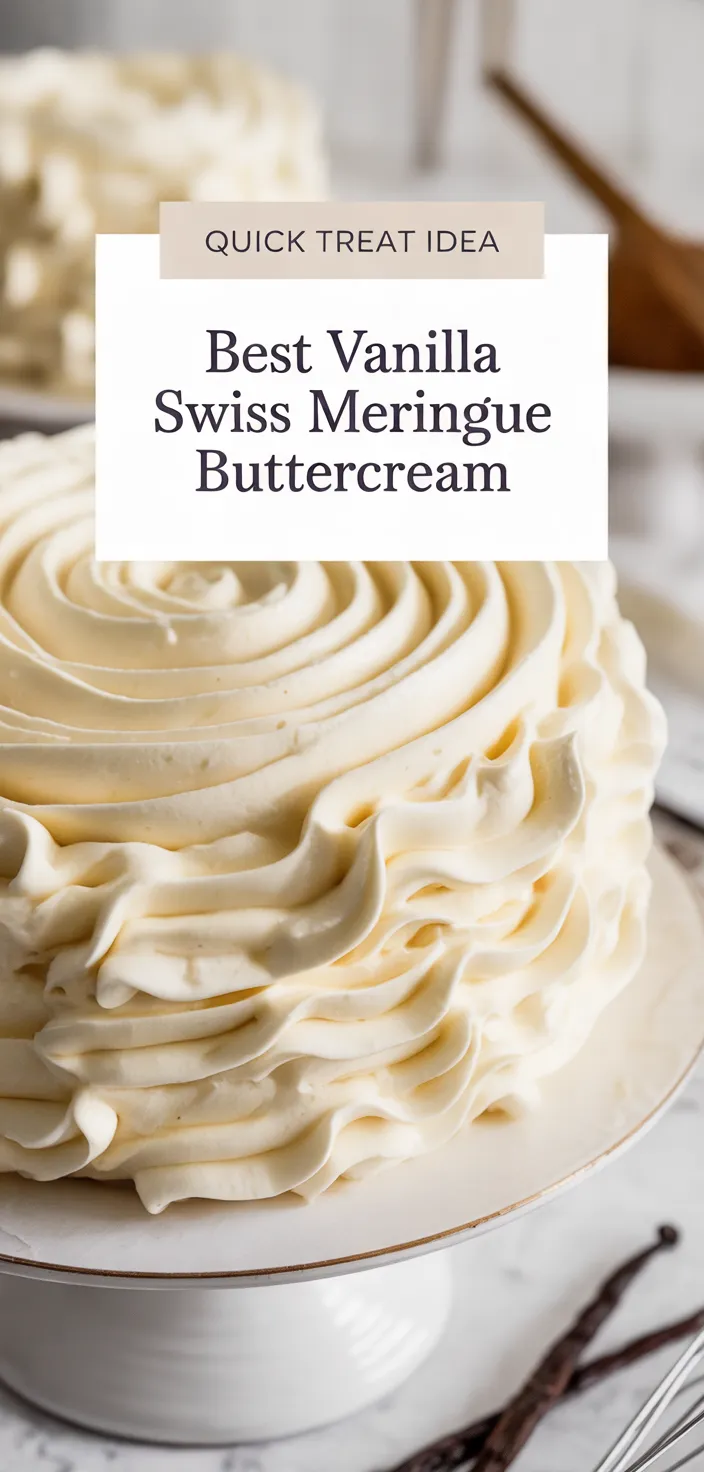
I’m obsessed with Vanilla Swiss Meringue Buttercream because it hits that rare frosting sweet spot: silky, light, creamy, and sturdy enough to actually behave on cakes and cupcakes. I love how it tastes rich without feeling heavy, with unsalted butter giving it that smooth bakery-style finish and pure vanilla extract bringing the flavor front and center.
But the texture is what gets me every time. So glossy.
So fluffy. So ridiculously smooth.
I adore frosting that pipes beautifully, spreads like satin, and doesn’t taste like a sugar bomb. And this one?
This is the buttercream I always come back to.
Ingredients
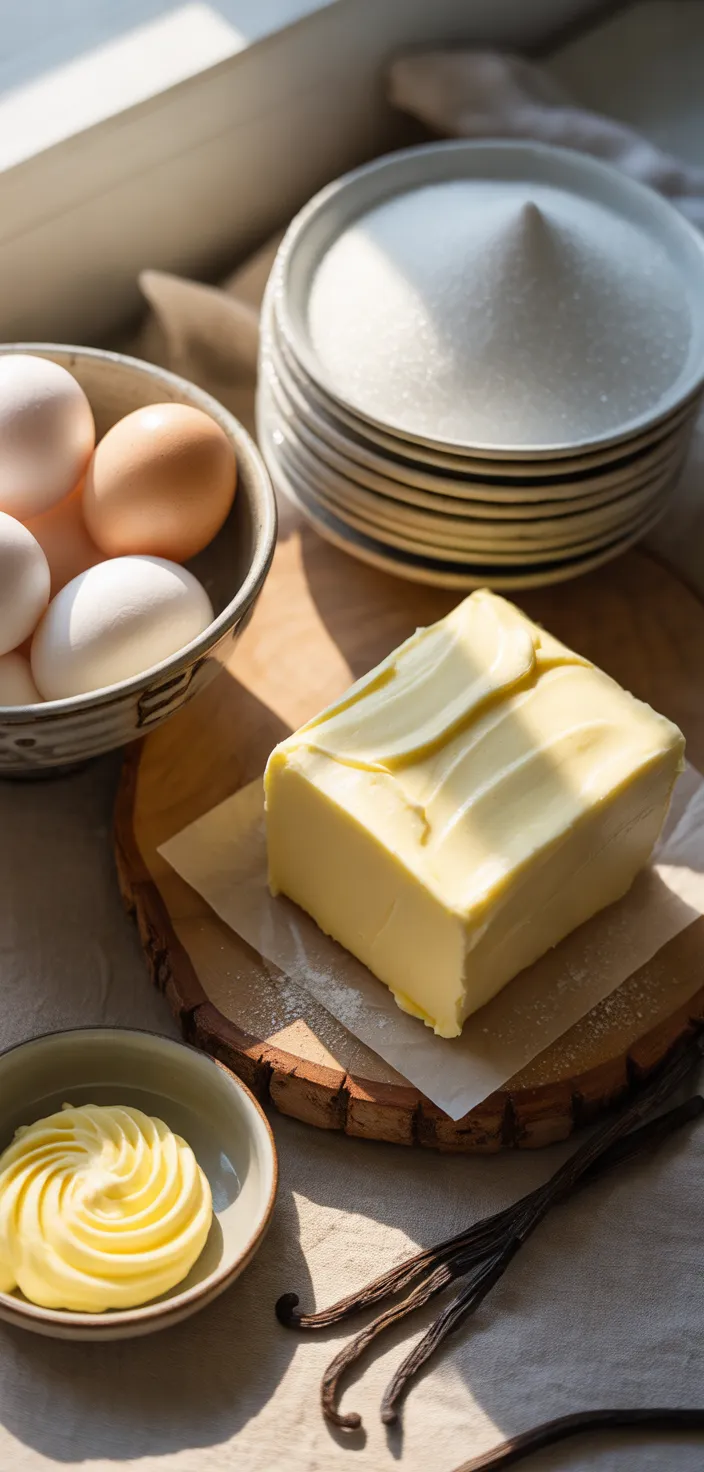
- Egg whites give the frosting its fluffy lift, so it feels light, not greasy.
- Granulated sugar sweetens things up and helps make that silky, glossy meringue base.
- Unsalted butter brings the creamy richness you want in real-deal buttercream.
- Vanilla extract adds cozy bakery flavor, while vanilla bean paste looks fancy and tastes deeper.
- Fine sea salt keeps the sweetness in check, because frosting shouldn’t taste like straight sugar.
- Plus, a splash of milk or cream can loosen the texture if it’s too thick.
- Basically, these ingredients make buttercream that’s smooth, stable, and not weirdly heavy.
Ingredient Quantities
- 4 large egg whites (about 120 g)
- 1 cup granulated sugar (200 g)
- 1 1/2 cups unsalted butter, softened (340 g)
- 2 teaspoons pure vanilla extract or vanilla bean paste
- Pinch fine sea salt
- Optional: 1 to 2 tablespoons neutral-flavored milk or heavy cream for adjusting texture
How to Make this
1. Combine egg whites and granulated sugar in a heatproof bowl and set over a saucepan of gently simmering water, whisking constantly until the sugar is fully dissolved and the mixture feels warm to the touch, about 3 to 4 minutes; thermometer should read 160°F to 165°F (70°C to 74°C).
2. Transfer the warm egg white mixture to the bowl of a stand mixer fitted with the whisk attachment or to a large bowl if using a hand mixer.
3. Whip the mixture on medium-high speed until stiff, glossy peaks form and the bowl is cool to the touch, about 8 to 12 minutes.
4. Reduce mixer speed to low and add the softened butter in several pieces, mixing until incorporated before adding more; once all butter is added, increase speed to medium and continue to whip until smooth and silky, about 3 to 5 minutes. If the mixture looks separated or curdled at any point, keep whipping and it will come together.
5. Add the vanilla extract or vanilla bean paste and a pinch of fine sea salt, then mix until fully blended.
6. Taste and adjust sweetness or vanilla as desired.
7. If the buttercream is too stiff, add 1 tablespoon of neutral-flavored milk or heavy cream at a time and mix until you reach the desired spreading consistency.
8. If the buttercream is too soft because of warm butter or environment, chill the bowl for 10 to 15 minutes, then re-whip until firm and fluffy.
9. Use immediately to frost cakes and cupcakes, or store in an airtight container in the refrigerator for up to 1 week; bring to room temperature and re-whip before using.
10. For longer storage, freeze up to 3 months, thaw in the refrigerator overnight, then bring to room temperature and re-whip until smooth.
Equipment Needed
1. Heatproof mixing bowl (metal or glass)
2. Saucepan for simmering water (for a double boiler)
3. Whisk (stainless steel)
4. Candy or instant-read thermometer (reads 160 to 165°F / 70 to 74°C)
5. Stand mixer with whisk attachment or hand mixer
6. Rubber spatula for scraping and folding
7. Measuring cups and kitchen scale for accuracy
8. Airtight container for storage (or piping bag and tips for decorating)
FAQ
Best Vanilla Swiss Meringue Buttercream Recipe Substitutions and Variations
- Egg whites (4 large, about 120 g): use 9 tablespoons aquafaba (liquid from canned chickpeas) to make a vegan Swiss meringue; or 4 tablespoons powdered egg whites reconstituted per package instructions for longer storage; or separate and weigh to match 120 g of fresh whites if sizes vary
- Granulated sugar (1 cup, 200 g): substitute caster or superfine sugar at a 1:1 ratio for quicker dissolving; or use a 1:1 blend of granulated sugar and powdered sugar for a slightly softer texture; or use organic cane sugar for a subtle molasses note
- Unsalted butter (1 1/2 cups, 340 g): use an equal amount of European-style butter for a richer flavor; or swap in vegan stick butter at a 1:1 ratio for a dairy-free buttercream; or use half butter and half vegetable shortening (1:1 by weight) for extra stability in warm conditions
- Vanilla extract or paste (2 tsp): use 2 teaspoons vanilla bean powder for intense vanilla flavor; or substitute 1 teaspoon pure almond extract plus 1 teaspoon vanilla for a nutty twist; or use 1 tablespoon of scraped vanilla bean seeds for maximum aroma
Pro Tips
1. Heat the egg white and sugar mixture gently and test with a candy or instant-read thermometer so you hit 160°F to 165°F consistently. That step gives you a safe, shiny meringue base and prevents a grainy texture.
2. Use butter that is softened but still cool to the touch. If it feels greasy or nearly liquid, your buttercream will be too soft. Pop the butter in the fridge for 10 minutes if needed, then continue adding it in small pieces so the meringue stays aerated.
3. If the buttercream looks separated or curdled when you add butter, be patient and keep whipping. If it does not come back together after several minutes, chill the bowl briefly for 5 to 10 minutes and then whip again. Avoid adding more liquid until it is smooth.
4. For best piping and frosting results, bring chilled buttercream to room temperature and re-whip to restore fluffiness. If you need to adjust consistency, add neutral milk or cream 1 tablespoon at a time rather than more than you think you need.
Best Vanilla Swiss Meringue Buttercream Recipe
I can’t get over how Vanilla Swiss Meringue Buttercream turns out so silky, fluffy, and stable that every cake looks bakery worthy. This is the frosting I trust when I want flawless swirls, smooth sides, and a finish that steals the show.
12
servings
275
kcal
Equipment: 1. Heatproof mixing bowl (metal or glass)
2. Saucepan for simmering water (for a double boiler)
3. Whisk (stainless steel)
4. Candy or instant-read thermometer (reads 160 to 165°F / 70 to 74°C)
5. Stand mixer with whisk attachment or hand mixer
6. Rubber spatula for scraping and folding
7. Measuring cups and kitchen scale for accuracy
8. Airtight container for storage (or piping bag and tips for decorating)
Ingredients
4 large egg whites (about 120 g)
1 cup granulated sugar (200 g)
1 1/2 cups unsalted butter, softened (340 g)
2 teaspoons pure vanilla extract or vanilla bean paste
Pinch fine sea salt
Optional: 1 to 2 tablespoons neutral-flavored milk or heavy cream for adjusting texture
Directions
- Combine egg whites and granulated sugar in a heatproof bowl and set over a saucepan of gently simmering water, whisking constantly until the sugar is fully dissolved and the mixture feels warm to the touch, about 3 to 4 minutes; thermometer should read 160°F to 165°F (70°C to 74°C).
- Transfer the warm egg white mixture to the bowl of a stand mixer fitted with the whisk attachment or to a large bowl if using a hand mixer.
- Whip the mixture on medium-high speed until stiff, glossy peaks form and the bowl is cool to the touch, about 8 to 12 minutes.
- Reduce mixer speed to low and add the softened butter in several pieces, mixing until incorporated before adding more; once all butter is added, increase speed to medium and continue to whip until smooth and silky, about 3 to 5 minutes. If the mixture looks separated or curdled at any point, keep whipping and it will come together.
- Add the vanilla extract or vanilla bean paste and a pinch of fine sea salt, then mix until fully blended.
- Taste and adjust sweetness or vanilla as desired.
- If the buttercream is too stiff, add 1 tablespoon of neutral-flavored milk or heavy cream at a time and mix until you reach the desired spreading consistency.
- If the buttercream is too soft because of warm butter or environment, chill the bowl for 10 to 15 minutes, then re-whip until firm and fluffy.
- Use immediately to frost cakes and cupcakes, or store in an airtight container in the refrigerator for up to 1 week; bring to room temperature and re-whip before using.
- For longer storage, freeze up to 3 months, thaw in the refrigerator overnight, then bring to room temperature and re-whip until smooth.
Notes
- Below you’ll find my best estimate of this recipe’s nutrition facts. Treat the numbers as a guide rather than a rule—great food should nourish both body and spirit. Figures are approximate, and the website owner assumes no liability for any inaccuracies in this recipe.
Nutrition Facts
- Serving Size: 55g
- Total number of serves: 12
- Calories: 275kcal
- Fat: 23g
- Saturated Fat: 14.5g
- Trans Fat: 0.85g
- Polyunsaturated: 0.85g
- Monounsaturated: 6g
- Cholesterol: 61mg
- Sodium: 29mg
- Potassium: 23mg
- Carbohydrates: 16.8g
- Fiber: 0g
- Sugar: 16.7g
- Protein: 1.2g
- Vitamin A: 194IU
- Vitamin C: 0mg
- Calcium: 7.5mg
- Iron: 0.02mg