
I’m sharing the secrets behind flawless French macarons: smooth tops, crisp shells, chewy centers, and 50 gorgeous little sandwich cookies ready for any filling you love.
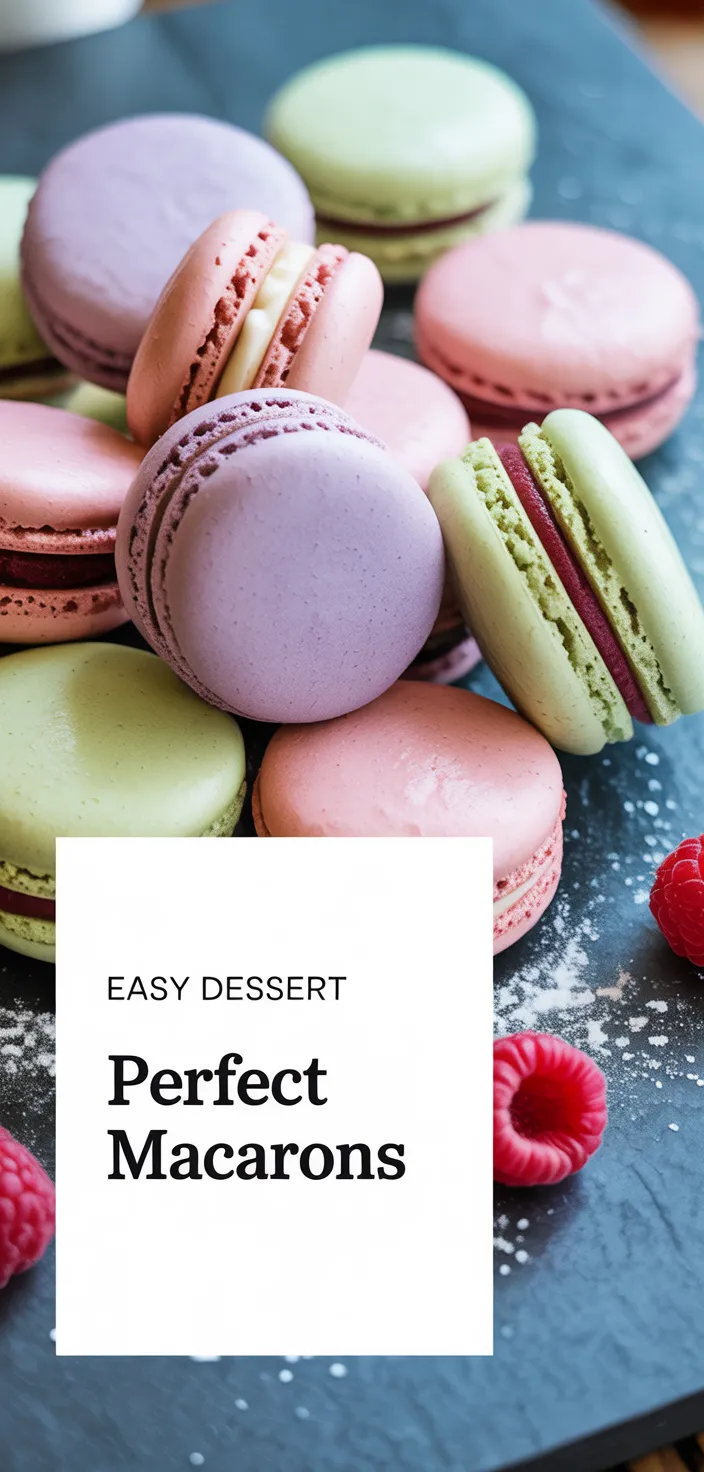
I’m obsessed with macarons because they’re tiny, dramatic, and ridiculously satisfying when they hit right. That crisp shell, the chewy middle, the creamy filling smashed in between.
Yes, please. I love how blanched almond flour and powdered sugar turn into something this delicate, almost fancy, but still totally snackable by the handful.
And with 50 macarons on the tray, I get to play favorites without pretending I’m sharing equally. But the real pull is the texture.
Light bite, soft center, sweet little crunch. Pair them with whatever filling I’m craving and suddenly dessert feels like a full-on event for me.
Ingredients
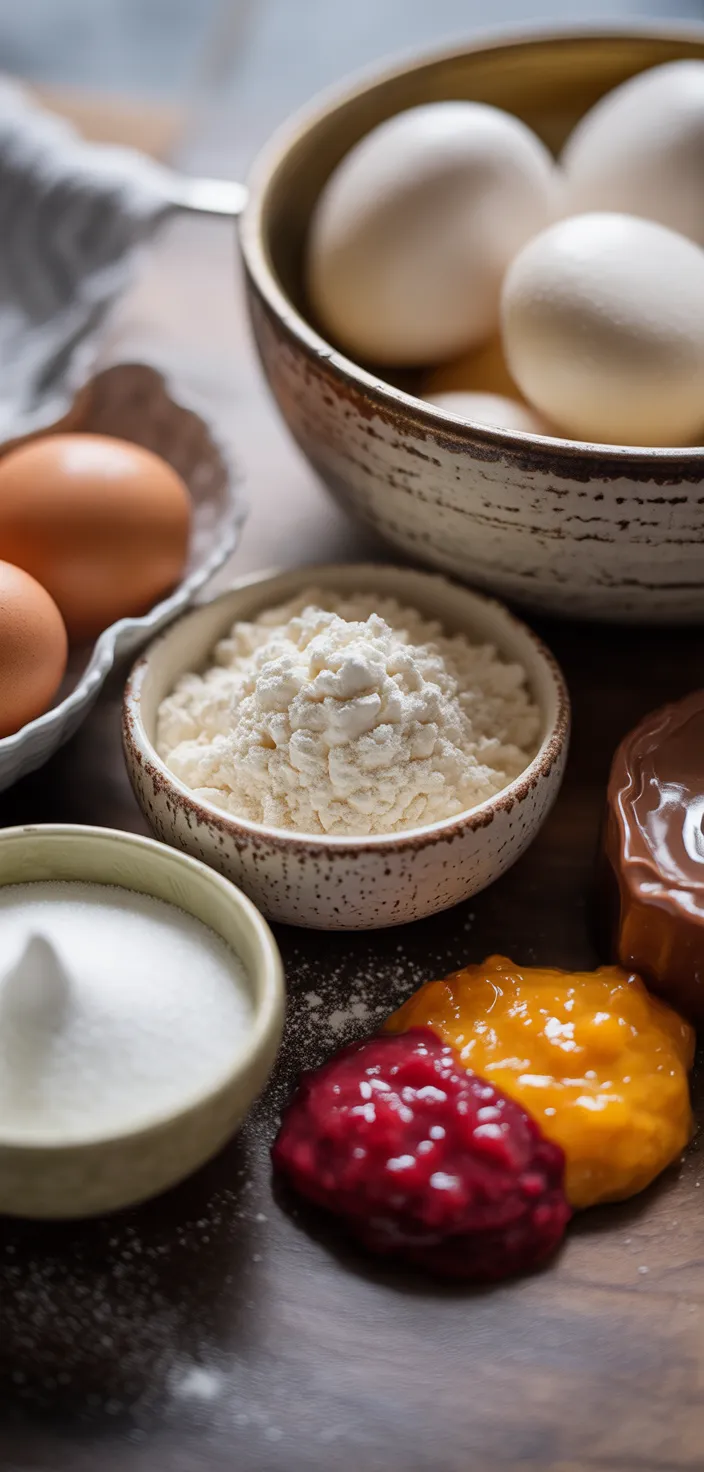
- Almond flour gives shells that nutty bite and delicate chew you’re chasing.
- Powdered sugar keeps things smooth, light, and not gritty.
Tiny but mighty.
- Egg whites bring the structure, shine, and that classic macaron lift.
- Granulated sugar helps the meringue hold strong, so your shells don’t flop.
- Water makes the syrup work, basically helping the texture stay glossy and stable.
- Sea salt cuts the sweetness, because macarons shouldn’t taste like straight sugar.
- Cream of tartar or lemon juice keeps the whites steady and less fussy.
- Gel coloring adds pretty color without watering things down.
Big win.
- Butter makes the filling rich, creamy, and honestly kind of irresistible.
- Vanilla brings cozy bakery flavor.
Plus, it plays nice with everything.
- Jams, curds, or ganache add the fun middle, from fruity to full chocolate.
Ingredient Quantities
- For macaron shells (makes about 100 shells / 50 sandwich macarons)
- 300 g blanched almond flour, finely ground and sifted
- 300 g powdered sugar, sifted
- 225 g egg whites, room temperature (about 7 large)
- 200 g granulated sugar, superfine if available
- 50 g water
- 1/4 teaspoon fine sea salt
- 1/4 teaspoon cream of tartar or 1/2 teaspoon lemon juice
- Gel or paste food coloring, optional
- For a classic buttercream filling (enough for 50 sandwiches)
- 400 g unsalted butter, softened
- 200 g powdered sugar, sifted
- 4 large egg whites
- 100 g granulated sugar
- 1 teaspoon vanilla extract
- Pinch of salt
- Optional fillings and add ins
- Fruit jams or curds, about 400 to 500 g total
- Chocolate ganache: 400 g chocolate with 200 g heavy cream
- Pasteurized egg white powder, if substituting fresh whites (use manufacturer guidelines)
How to Make this
1. Preheat oven to 150 C (300 F). Line multiple baking sheets with parchment or silicone mats and fit a piping bag with a 10 mm round tip.
2. Sift together 300 g blanched almond flour and 300 g powdered sugar into a large bowl; repeat once if needed to ensure no lumps.
3. Make Italian meringue: combine 200 g granulated sugar and 50 g water in a small saucepan and heat to 118 C (244 F). Meanwhile place 225 g room temperature egg whites, 1/4 teaspoon fine sea salt and 1/4 teaspoon cream of tartar or 1/2 teaspoon lemon juice in the bowl of a stand mixer and whip to soft peaks. With the mixer running, slowly pour the hot sugar syrup down the side of the bowl into the whites and continue whipping until glossy and stiff and the bowl is only slightly warm to the touch; add gel or paste coloring if using and mix until evenly distributed.
4. Fold the sifted almond flour and powdered sugar mixture into the meringue in three additions using a flexible spatula. Perform macaronage until the batter flows in a thick ribbon from the spatula and drips back into the bowl in roughly 10 to 15 seconds; stop before the batter becomes runny.
5. Transfer batter to the prepared piping bag and pipe
3.5 to 4 cm rounds spaced about
2.5 cm apart. Tap the trays firmly on the counter two to three times to release air bubbles. Pop any remaining surface bubbles with a toothpick.
6. Allow piped shells to rest at room temperature until a dry skin forms, about 30 to 60 minutes depending on humidity. They should no longer stick to your finger when lightly touched.
7. Bake sheets one at a time or two at a time on different racks for 14 to 16 minutes, rotating halfway if needed, until shells have feet and lift easily from the paper. Let cool completely on the sheet before removing.
8. Make the buttercream filling: combine 4 large egg whites and 100 g granulated sugar in a heatproof bowl and whisk over a simmering water bath until the mixture reaches 71 C (160 F) and is warm and slightly thickened. Transfer to a mixer and whip to stiff, glossy peaks and cool to room temperature. With the mixer running, add 400 g softened unsalted butter in cubes gradually until smooth, then beat in 200 g powdered sugar, 1 teaspoon vanilla extract and a pinch of salt. Adjust texture by chilling briefly if too soft or adding a little powdered sugar if too loose.
9. Assemble macarons by pairing shells of similar size and piping or spreading about 8 to 10 g filling per sandwich. Chill assembled macarons in an airtight container for at least 24 hours for best flavor and texture, then bring to room temperature before serving. Optional: fill some shells with jam, curd or chocolate ganache (400 g chocolate with 200 g cream) as desired.
Equipment Needed
1. Oven
2. Several rimmed baking sheets
3. Parchment paper or silicone baking mats
4. Piping bag fitted with a 10 mm round tip
5. Stand mixer with whisk attachment
6. Small saucepan plus a candy or instant read thermometer
7. Fine mesh sieve or sifter
8. Flexible silicone spatula
9. Heatproof mixing bowl and whisk for the bain marie
FAQ
Perfect Macarons Recipe Substitutions and Variations
- Blanched almond flour: substitute finely ground blanched almond meal 1:1, or use 50% almond meal + 50% sifted powdered sugar to mimic texture if meal is coarser
- Powdered sugar: make your own by blending 1 cup granulated sugar with 1 tablespoon cornstarch until very fine; use sifted storebought powdered sugar 1:1
- Egg whites: use pasteurized liquid egg whites by weight 1:1, or reconstitute meringue powder per manufacturer guidelines to equal the required grams
- Granulated sugar (for syrup): substitute caster sugar (superfine) 1:1 for quicker dissolution, or use a neutral glucose/corn syrup up to 20% of the sugar weight to improve shell shine and stability
Pro Tips
1. Age and temperature the egg whites slightly: separate them at least a day ahead and keep them covered in the fridge, then bring to room temperature before whipping. This improves meringue stability and gives you more predictable feet.
2. Watch the Italian meringue closely as you pour and whip: pour the hot syrup down the bowl wall slowly and keep mixing until the bowl feels just slightly warm. Underwhipping leaves weak shells, overwhipping makes the batter dry and hard to fold.
3. Master the macaronage by feel, not time: you want a batter that flows in a thick ribbon and settles back in about 10 to 15 seconds. If it runs like soup you have overworked it; if it holds peaks it needs more folding. Do short, confident folds, scraping the sides often.
4. Drying and baking depend on humidity and oven hot spots: let shells form a full dry skin before baking, and bake one tray at a time if your oven is uneven. Use an oven thermometer and rotate trays halfway to ensure even color and reliable feet formation.
Perfect Macarons Recipe
I’m sharing the secrets behind flawless French macarons: smooth tops, crisp shells, chewy centers, and 50 gorgeous little sandwich cookies ready for any filling you love.
50
servings
160
kcal
Equipment: 1. Oven
2. Several rimmed baking sheets
3. Parchment paper or silicone baking mats
4. Piping bag fitted with a 10 mm round tip
5. Stand mixer with whisk attachment
6. Small saucepan plus a candy or instant read thermometer
7. Fine mesh sieve or sifter
8. Flexible silicone spatula
9. Heatproof mixing bowl and whisk for the bain marie
Ingredients
For macaron shells (makes about 100 shells / 50 sandwich macarons)
300 g blanched almond flour, finely ground and sifted
300 g powdered sugar, sifted
225 g egg whites, room temperature (about 7 large)
200 g granulated sugar, superfine if available
50 g water
1/4 teaspoon fine sea salt
1/4 teaspoon cream of tartar or 1/2 teaspoon lemon juice
Gel or paste food coloring, optional
For a classic buttercream filling (enough for 50 sandwiches)
400 g unsalted butter, softened
200 g powdered sugar, sifted
4 large egg whites
100 g granulated sugar
1 teaspoon vanilla extract
Pinch of salt
Optional fillings and add ins
Fruit jams or curds, about 400 to 500 g total
Chocolate ganache: 400 g chocolate with 200 g heavy cream
Pasteurized egg white powder, if substituting fresh whites (use manufacturer guidelines)
Directions
- Preheat oven to 150 C (300 F). Line multiple baking sheets with parchment or silicone mats and fit a piping bag with a 10 mm round tip.
- Sift together 300 g blanched almond flour and 300 g powdered sugar into a large bowl; repeat once if needed to ensure no lumps.
- Make Italian meringue: combine 200 g granulated sugar and 50 g water in a small saucepan and heat to 118 C (244 F). Meanwhile place 225 g room temperature egg whites, 1/4 teaspoon fine sea salt and 1/4 teaspoon cream of tartar or 1/2 teaspoon lemon juice in the bowl of a stand mixer and whip to soft peaks. With the mixer running, slowly pour the hot sugar syrup down the side of the bowl into the whites and continue whipping until glossy and stiff and the bowl is only slightly warm to the touch; add gel or paste coloring if using and mix until evenly distributed.
- Fold the sifted almond flour and powdered sugar mixture into the meringue in three additions using a flexible spatula. Perform macaronage until the batter flows in a thick ribbon from the spatula and drips back into the bowl in roughly 10 to 15 seconds; stop before the batter becomes runny.
- Transfer batter to the prepared piping bag and pipe
- 5 to 4 cm rounds spaced about
- 5 cm apart. Tap the trays firmly on the counter two to three times to release air bubbles. Pop any remaining surface bubbles with a toothpick.
- Allow piped shells to rest at room temperature until a dry skin forms, about 30 to 60 minutes depending on humidity. They should no longer stick to your finger when lightly touched.
- Bake sheets one at a time or two at a time on different racks for 14 to 16 minutes, rotating halfway if needed, until shells have feet and lift easily from the paper. Let cool completely on the sheet before removing.
- Make the buttercream filling: combine 4 large egg whites and 100 g granulated sugar in a heatproof bowl and whisk over a simmering water bath until the mixture reaches 71 C (160 F) and is warm and slightly thickened. Transfer to a mixer and whip to stiff, glossy peaks and cool to room temperature. With the mixer running, add 400 g softened unsalted butter in cubes gradually until smooth, then beat in 200 g powdered sugar, 1 teaspoon vanilla extract and a pinch of salt. Adjust texture by chilling briefly if too soft or adding a little powdered sugar if too loose.
- Assemble macarons by pairing shells of similar size and piping or spreading about 8 to 10 g filling per sandwich. Chill assembled macarons in an airtight container for at least 24 hours for best flavor and texture, then bring to room temperature before serving. Optional: fill some shells with jam, curd or chocolate ganache (400 g chocolate with 200 g cream) as desired.
Notes
- Below you’ll find my best estimate of this recipe’s nutrition facts. Treat the numbers as a guide rather than a rule—great food should nourish both body and spirit. Figures are approximate, and the website owner assumes no liability for any inaccuracies in this recipe.
Nutrition Facts
- Serving Size: 38g
- Total number of serves: 50
- Calories: 160kcal
- Fat: 9.5g
- Saturated Fat: 4.3g
- Trans Fat: 0.24g
- Polyunsaturated: 0.96g
- Monounsaturated: 3.56g
- Cholesterol: 17mg
- Sodium: 24mg
- Potassium: 55mg
- Carbohydrates: 16.6g
- Fiber: 0.6g
- Sugar: 16g
- Protein: 2.1g
- Vitamin A: 200IU
- Vitamin C: 0mg
- Calcium: 19mg
- Iron: 0.23mg